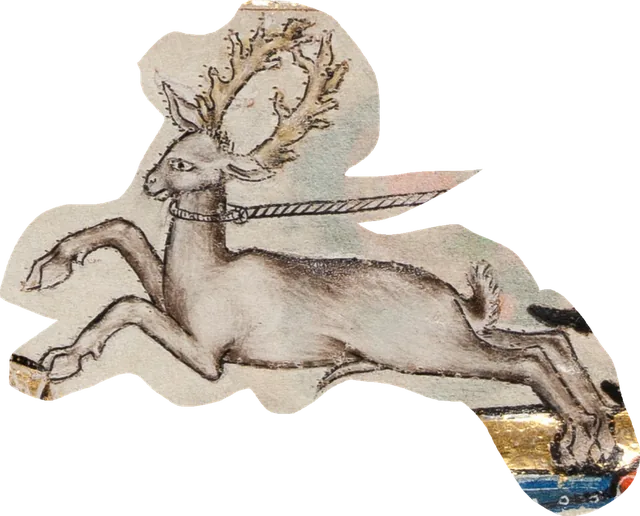
Bestiary
"Here begins the book of the nature of beasts."
Medieval animal lore, manuscript images and shop characters. Our nicknames are modern; uncertain attributions are identified in each entry.
Shop animal designs →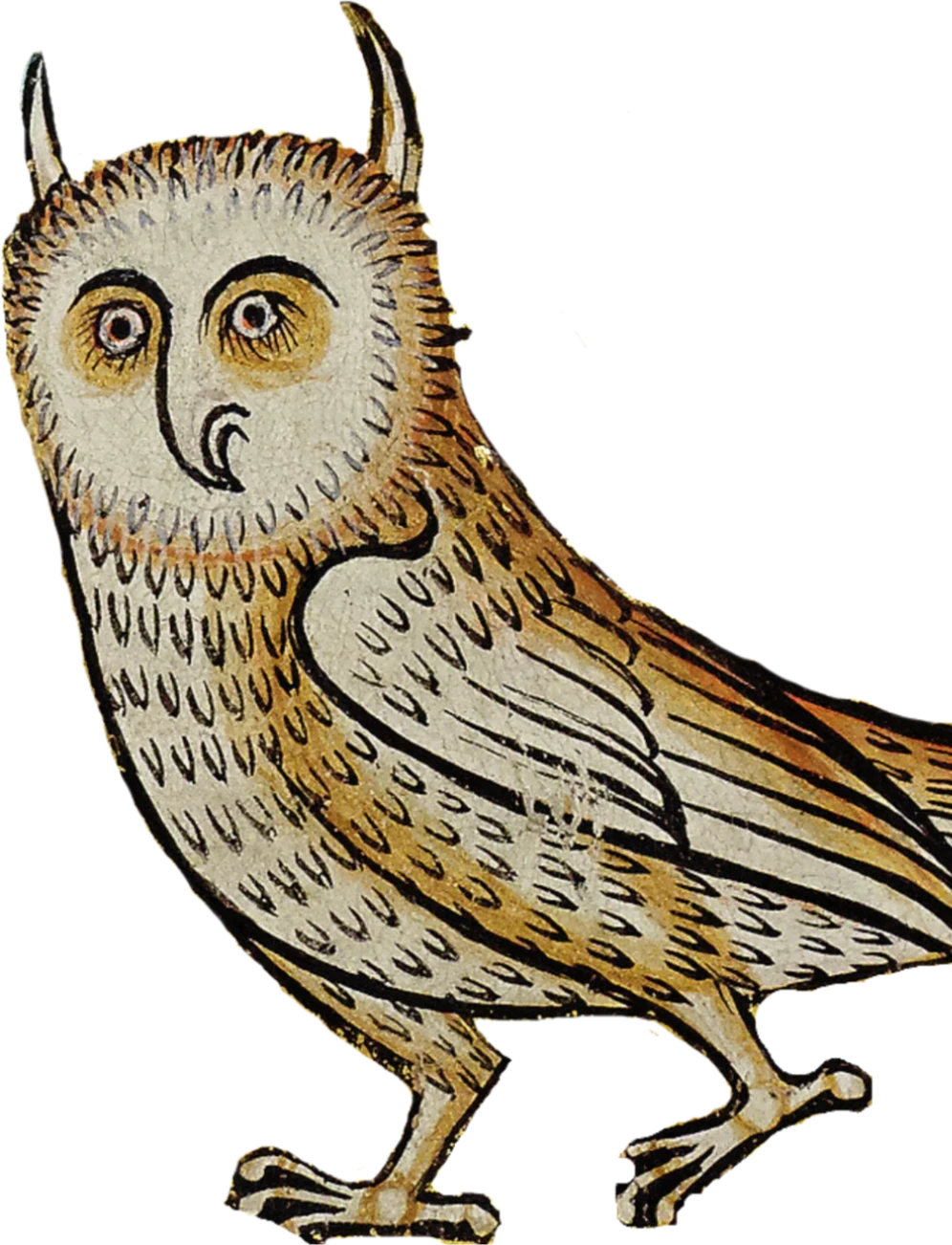
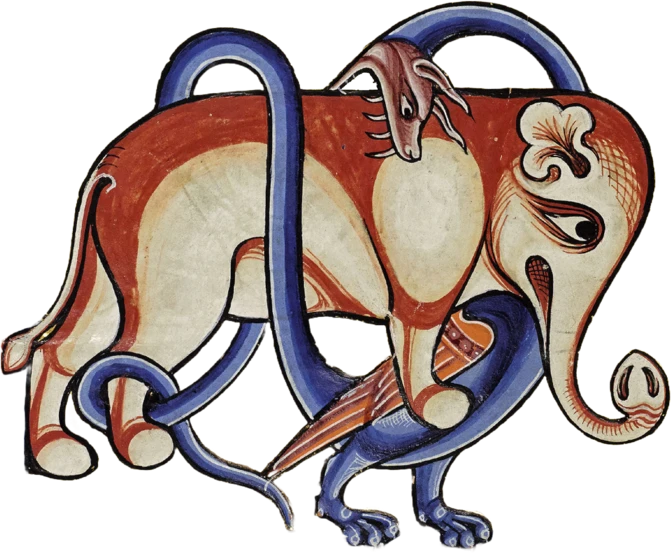
Draconibus
Medieval Bestiary Marginalia
Draconibus casually swallows an elephant whole, as recorded by medieval naturalists.

Roger the Lion
Medieval Manuscript Marginalia (Guild Mascot)
The original Medieval Animals guild mascot. Stares intently from the margin since 1348.
Read Lore →
King Humphrey
Medieval Manuscript Marginalia
King Humphrey silently evaluates your fluid intake from the high margins.
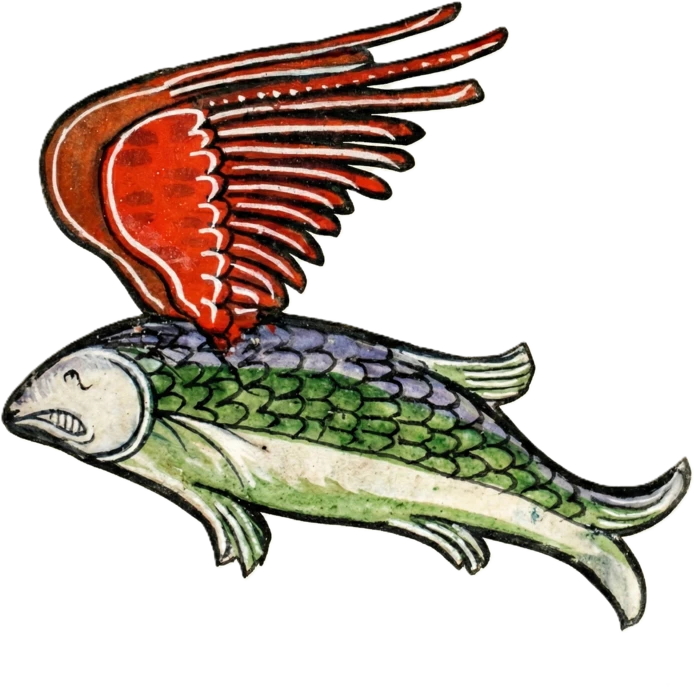
Flyfish
Medieval Manuscript Marginalia
He did not ask for the sky, and yet here we are. A winged fish of monastic contemplation.
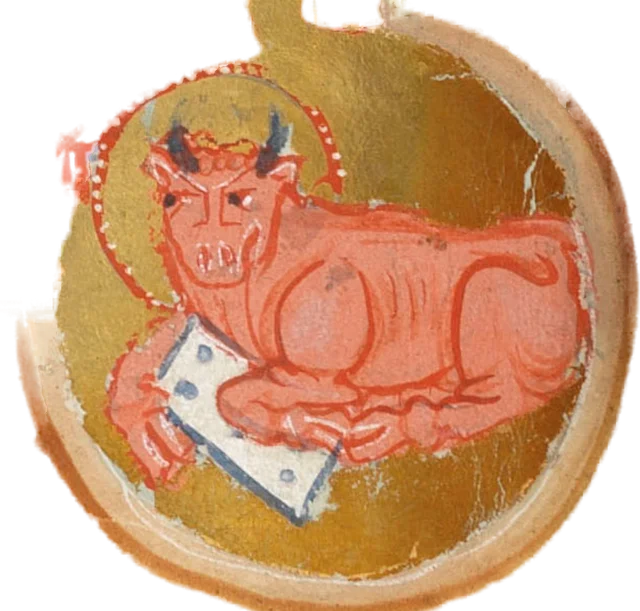
Red Bull
The Pontifical of Renaud de Bar (c. 1303–1316)
A curious marginal entity extracted from fourteenth-century manuscript parchment. Designed by anonymous monastic scribes during long vigils.
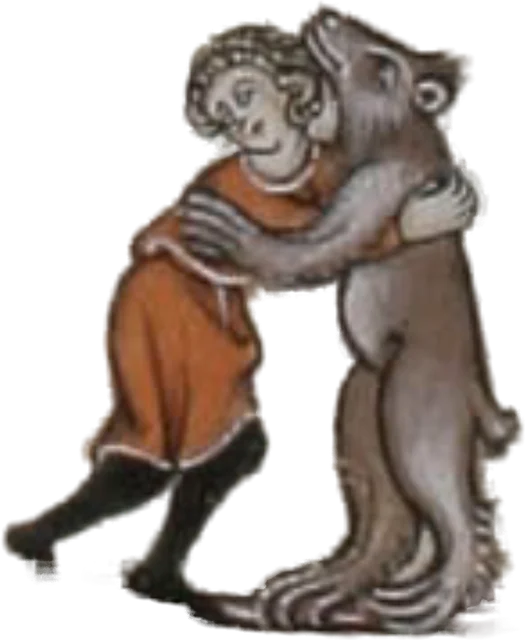
Dog Hug
The Pontifical of Renaud de Bar (c. 1303–1316)
A curious marginal entity extracted from fourteenth-century manuscript parchment. Designed by anonymous monastic scribes during long vigils.
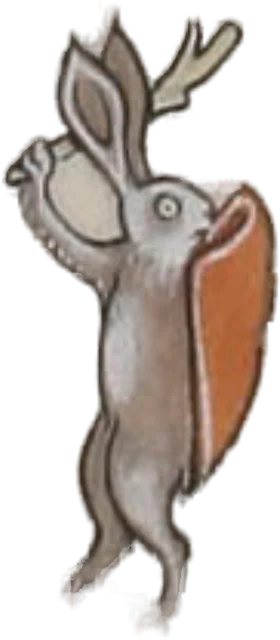
Imperiled Rabbit
The Pontifical of Renaud de Bar (c. 1303–1316)
A curious marginal entity extracted from fourteenth-century manuscript parchment. Designed by anonymous monastic scribes during long vigils.
Read Lore →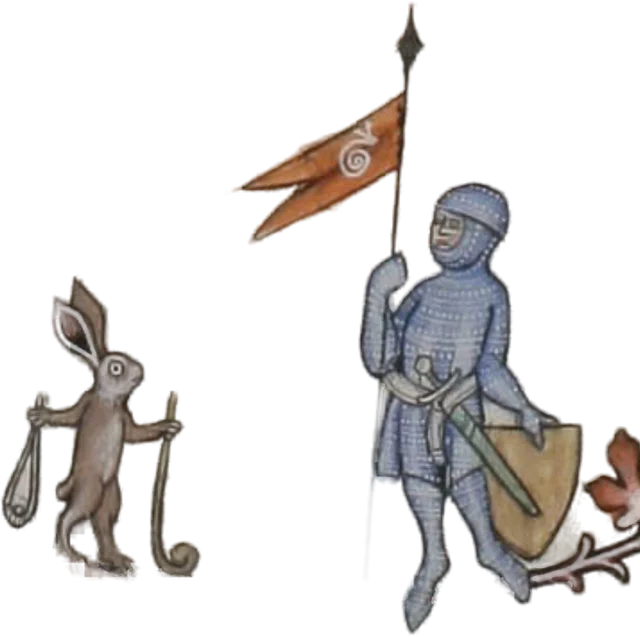
Rabbit And Knight
The Pontifical of Renaud de Bar (c. 1303–1316)
A curious marginal entity extracted from fourteenth-century manuscript parchment. Designed by anonymous monastic scribes during long vigils.
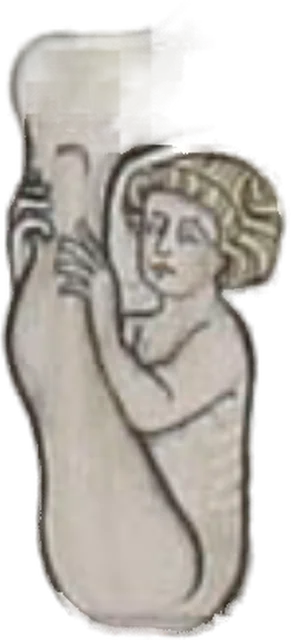
Homuncupod
The Pontifical of Renaud de Bar (c. 1303–1316)
A curious marginal entity extracted from fourteenth-century manuscript parchment. Designed by anonymous monastic scribes during long vigils.
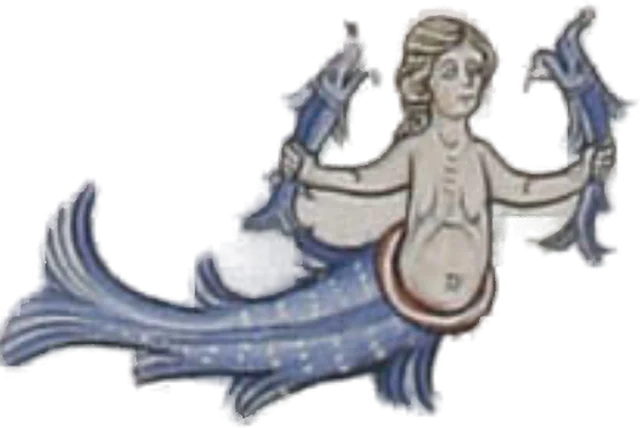
Cannibal Mermaid
The Pontifical of Renaud de Bar (c. 1303–1316)
A curious marginal entity extracted from fourteenth-century manuscript parchment. Designed by anonymous monastic scribes during long vigils.
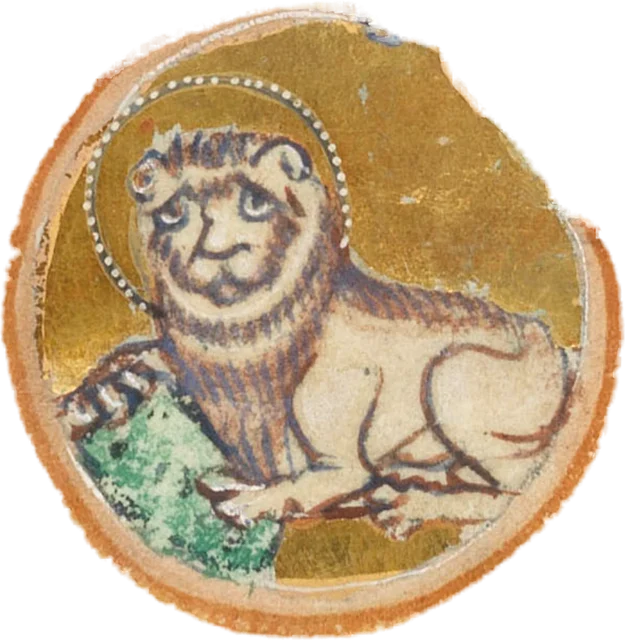
Concerned Lion
The Breslau Psalter (Psałterz wrocławski) (c. 1255–1268)
A curious marginal entity extracted from fourteenth-century manuscript parchment. Designed by anonymous monastic scribes during long vigils.
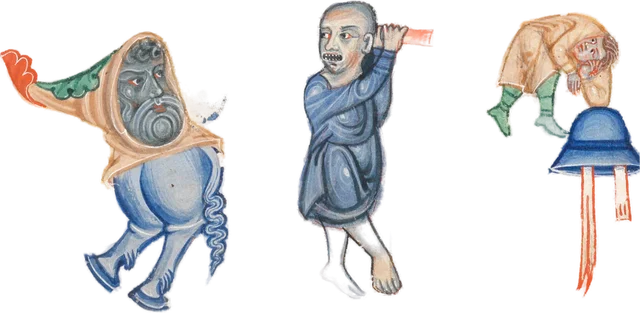
Haunchman Vignette
The Breslau Psalter (Psałterz wrocławski) (c. 1255–1268)
A curious marginal entity extracted from fourteenth-century manuscript parchment. Designed by anonymous monastic scribes during long vigils.
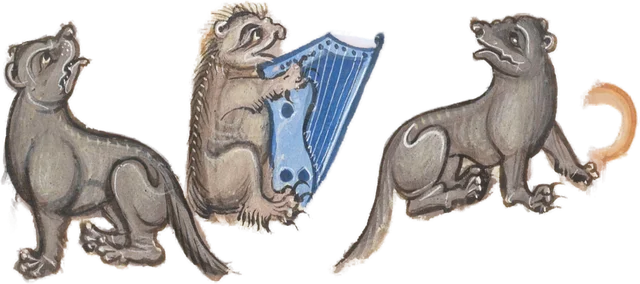
Three Dog Night
The Breslau Psalter (Psałterz wrocławski) (c. 1255–1268)
A curious marginal entity extracted from fourteenth-century manuscript parchment. Designed by anonymous monastic scribes during long vigils.
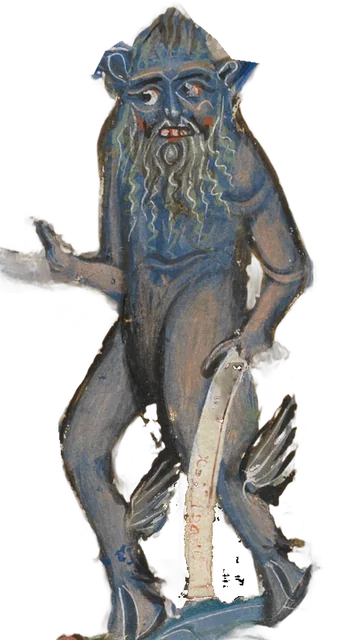
Breslau Satan
The Breslau Psalter (Psałterz wrocławski) (c. 1255–1268)
A curious marginal entity extracted from fourteenth-century manuscript parchment. Designed by anonymous monastic scribes during long vigils.
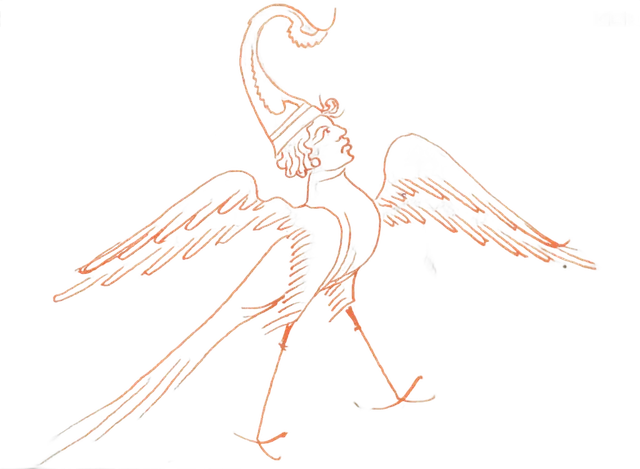
Duncebird
The Breslau Psalter (Psałterz wrocławski) (c. 1255–1268)
A curious marginal entity extracted from fourteenth-century manuscript parchment. Designed by anonymous monastic scribes during long vigils.
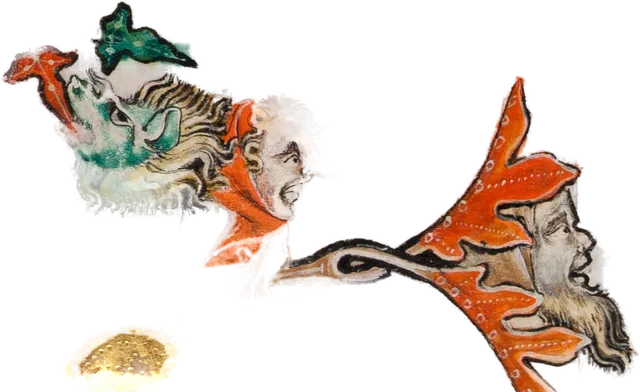
Tailnose Lion
Medieval Manuscript Marginalia (14th Century)
A curious marginal entity extracted from fourteenth-century manuscript parchment. Designed by anonymous monastic scribes during long vigils.
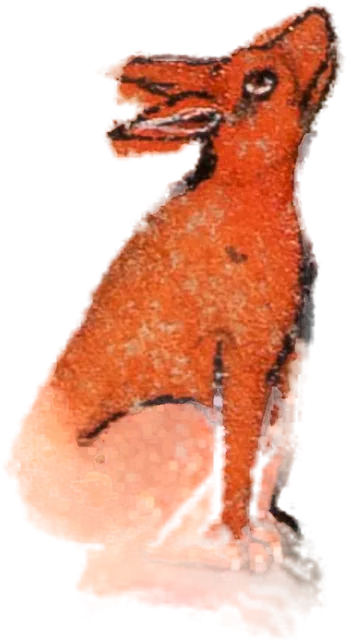
Red Fox
Medieval Manuscript Marginalia (14th Century)
A curious marginal entity extracted from fourteenth-century manuscript parchment. Designed by anonymous monastic scribes during long vigils.
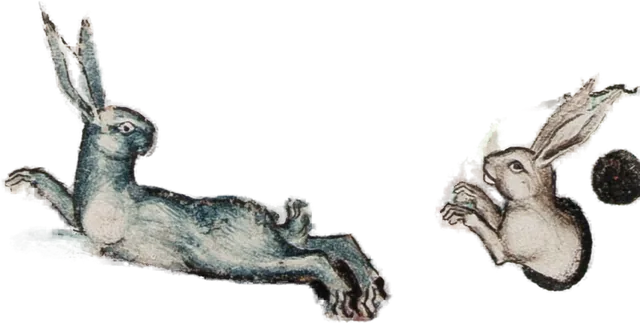
Rabbit Duo
Medieval Manuscript Marginalia (14th Century)
A curious marginal entity extracted from fourteenth-century manuscript parchment. Designed by anonymous monastic scribes during long vigils.
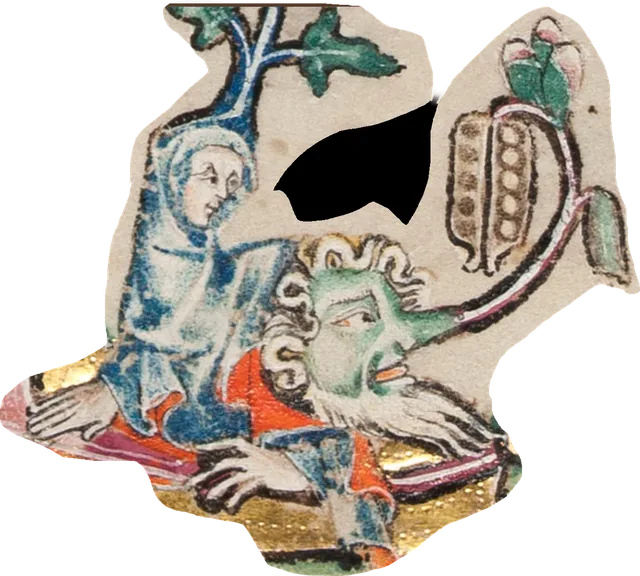
Peanose
Medieval Manuscript Marginalia (14th Century)
A curious marginal entity extracted from fourteenth-century manuscript parchment. Designed by anonymous monastic scribes during long vigils.
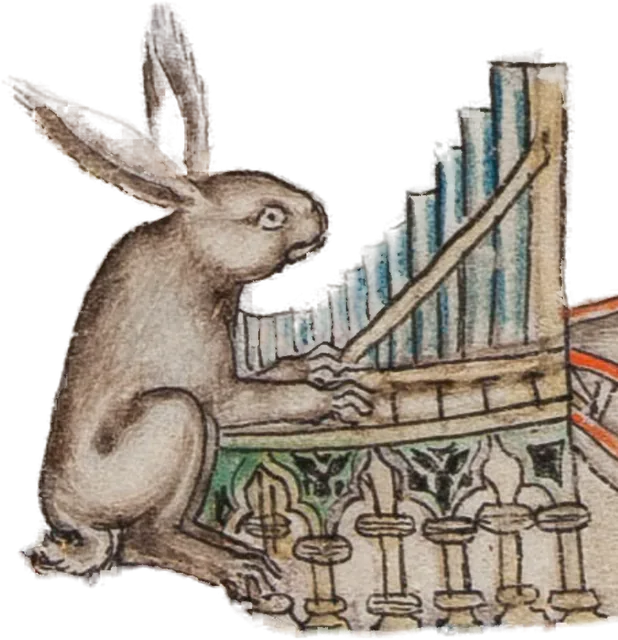
Organ-Pumping Hare
Franco-Flemish Book of Hours (c. 1320)
The ultimate inversion of ecclesiastical solemnity. A hare solemnly performs sacred polyphony on a portable positive organ while an enslaved hound pumps the twin leather bellows with palpable exhaustion.
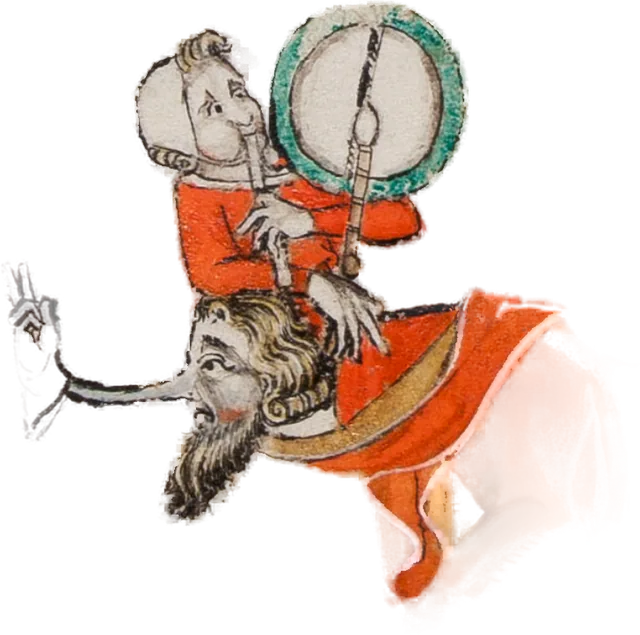
Manhaunch With Musician
Medieval Manuscript Marginalia (14th Century)
A curious marginal entity extracted from fourteenth-century manuscript parchment. Designed by anonymous monastic scribes during long vigils.
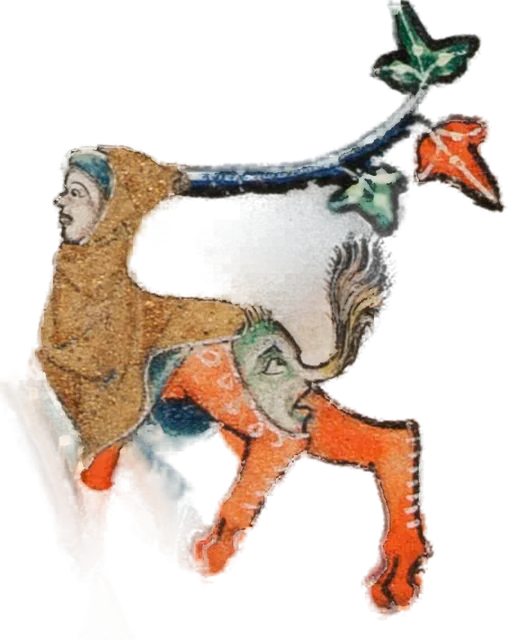
Headbutt 2
Medieval Manuscript Marginalia (14th Century)
A curious marginal entity extracted from fourteenth-century manuscript parchment. Designed by anonymous monastic scribes during long vigils.
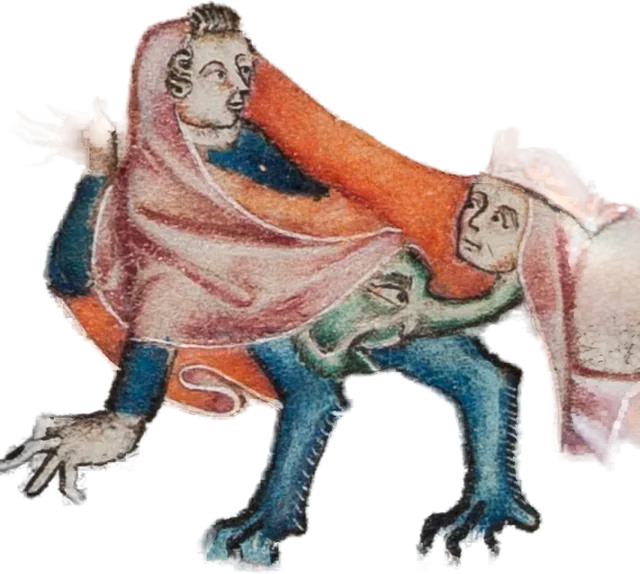
Headbutt
Medieval Manuscript Marginalia (14th Century)
A curious marginal entity extracted from fourteenth-century manuscript parchment. Designed by anonymous monastic scribes during long vigils.
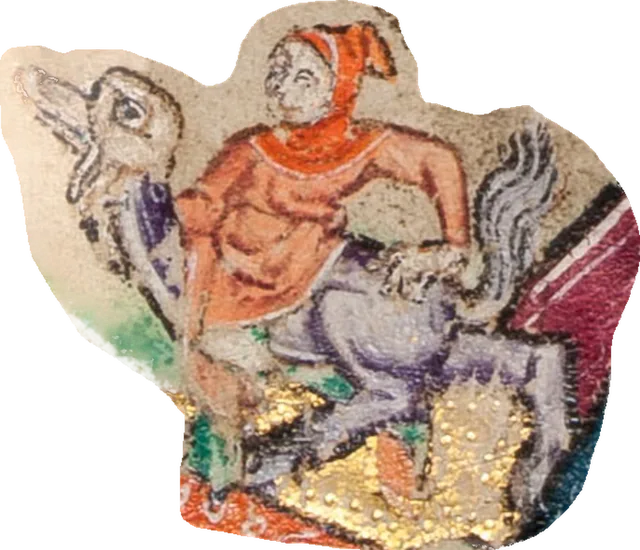
Duckhorse
Medieval Manuscript Marginalia (14th Century)
A curious marginal entity extracted from fourteenth-century manuscript parchment. Designed by anonymous monastic scribes during long vigils.
Donkey Rider
Medieval Manuscript Marginalia (14th Century)
A curious marginal entity extracted from fourteenth-century manuscript parchment. Designed by anonymous monastic scribes during long vigils.
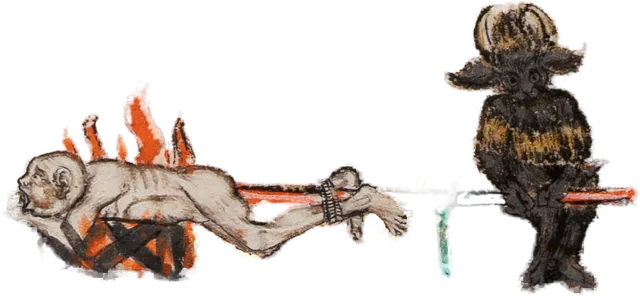
Demon Man Grill
Medieval Manuscript Marginalia (14th Century)
A curious marginal entity extracted from fourteenth-century manuscript parchment. Designed by anonymous monastic scribes during long vigils.
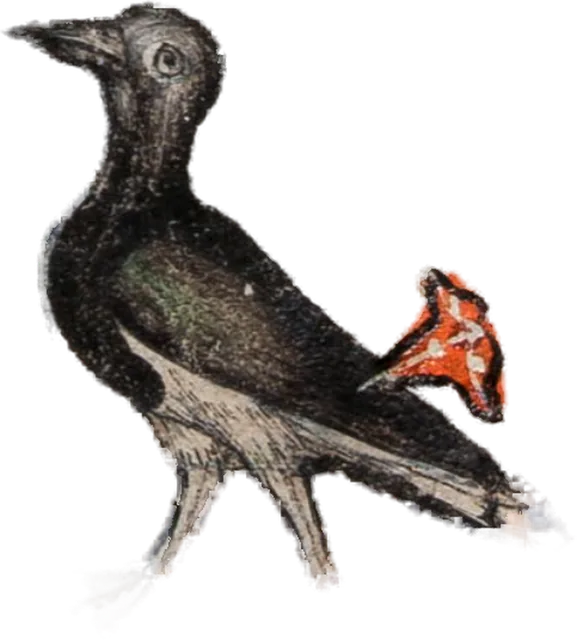
Crow
Medieval Manuscript Marginalia (14th Century)
A curious marginal entity extracted from fourteenth-century manuscript parchment. Designed by anonymous monastic scribes during long vigils.
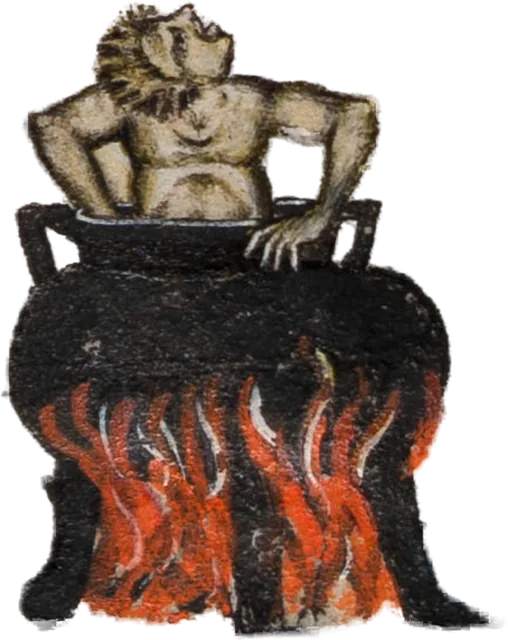
Burning Man
Medieval Manuscript Marginalia (14th Century)
A curious marginal entity extracted from fourteenth-century manuscript parchment. Designed by anonymous monastic scribes during long vigils.
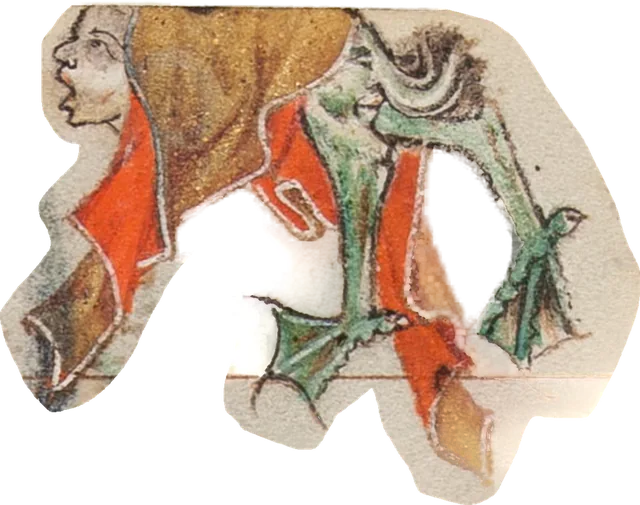
Manbird
The Macclesfield Psalter (c. 1330–1340)
A human head issuing directly into webbed, clawed limbs and avian plumage. East Anglian illuminators reveled in violating natural anatomy by joining human dignity to bestial flesh.
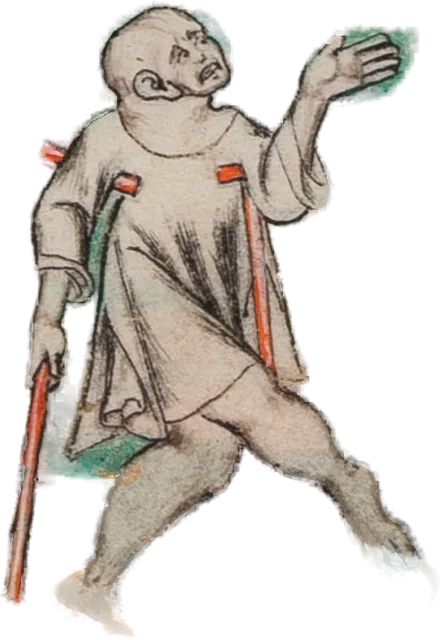
Injured Man
The Macclesfield Psalter (c. 1330–1340)
Hobbling on crutches with clawed extremities and an expression of profound dismay, this marginal figure captures the fragile, plague-haunted human condition amidst medieval chaos.
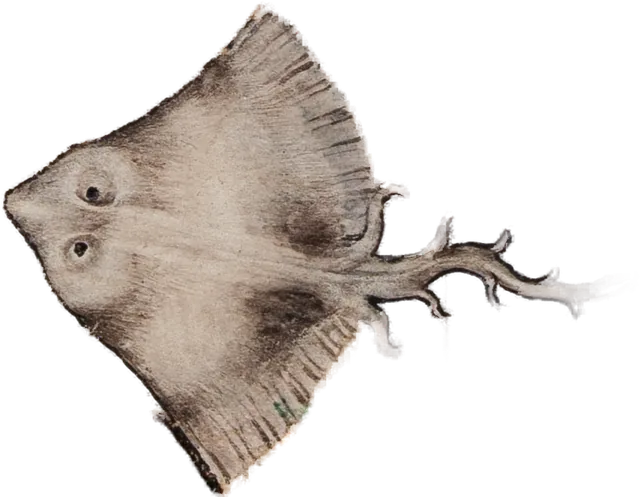
Ray
The Macclesfield Psalter (c. 1330–1340)
A flattened sea creature with unnervingly expressive eyes and a barbed tail. Medieval scribes viewed deep-sea cartilaginous fish as aquatic demons that had somehow slipped onto holy vellum.
Read Lore →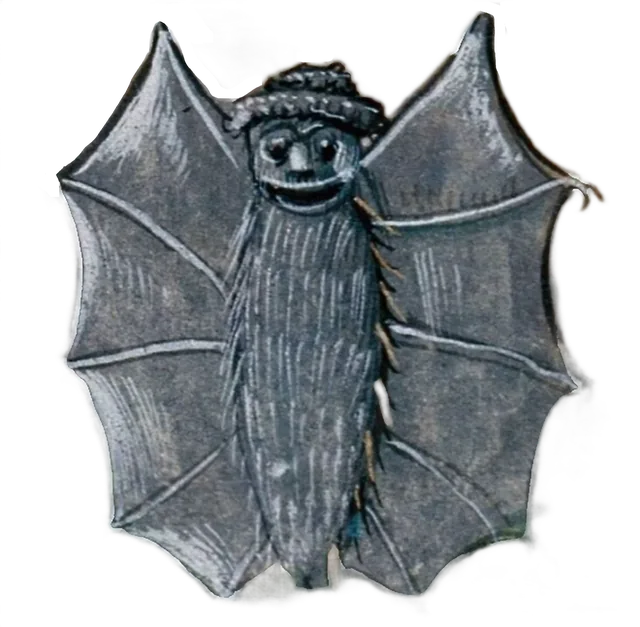
Hatbat
The Macclesfield Psalter (c. 1330–1340)
Spreading ribbed leathery wings and bearing an unsettling human grimace, this medieval chiropteran represents the liminal border between mouse and bird, innocence and infernal omen.
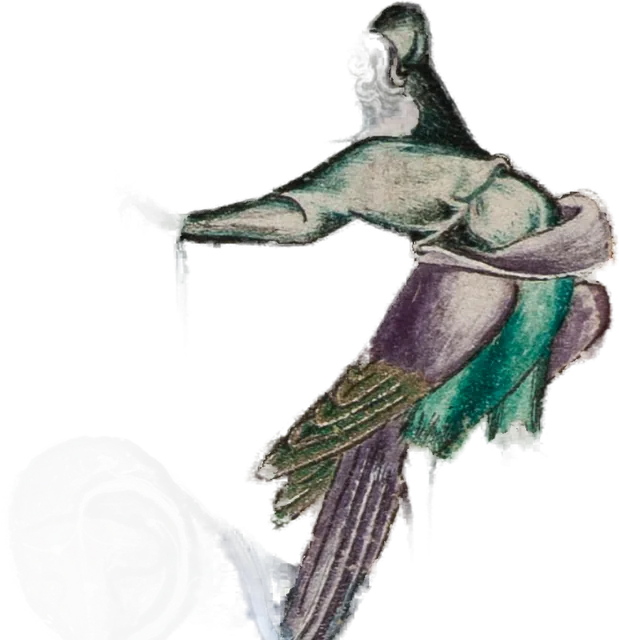
Birdman Archer
The Macclesfield Psalter (c. 1330–1340)
A seamless fusion of clerical hood, avian torso, and archer's draw. Grotesque hybrids in East Anglian marginalia frequently wielded longbows to shoot arrows into neighboring text columns.
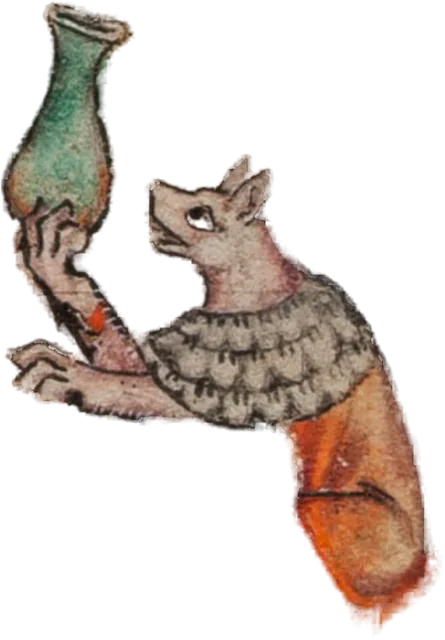
Doctor Dog
The Macclesfield Psalter (c. 1330–1340)
Clad in an ecclesiastical doctor's furred cowl, this studious hound raises a matula to the light. Whether he can interpret the urine specimen or simply admires the amber refraction remains unrecorded.
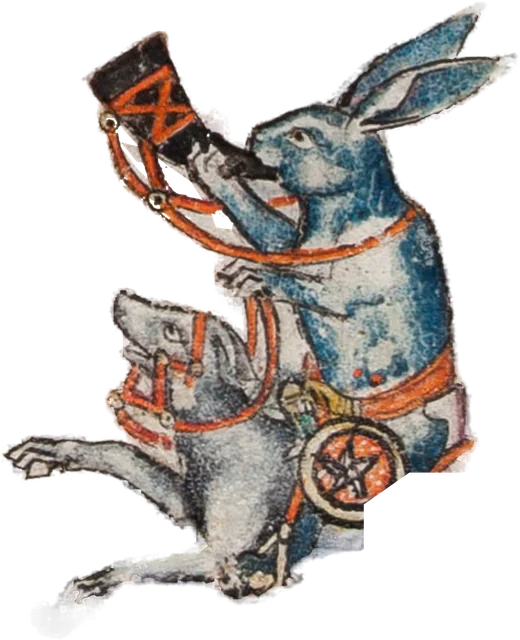
Cavalry Rabbit
The Macclesfield Psalter (c. 1330–1340)
The ultimate medieval role reversal. An armored blue hare sounds the war horn from astride his subjugated greyhound mount. In the margins of the Macclesfield Psalter, prey turns conqueror with zero remorse.
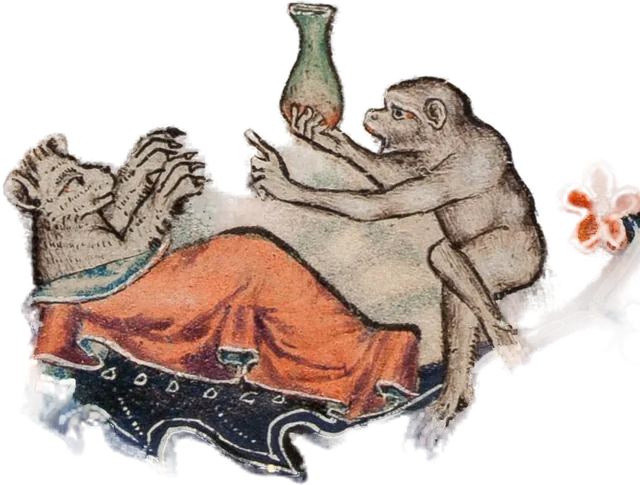
Monkey Physician
14th-century Franco-Flemish Book of Hours marginalia
A biting medieval parody of academic medicine. An ape physician holds aloft a uroscopy flask, peering through the amber fluid with diagnostic authority while his terrified, bedridden patient clutches the sheets in sheer dread of the impending prescription.
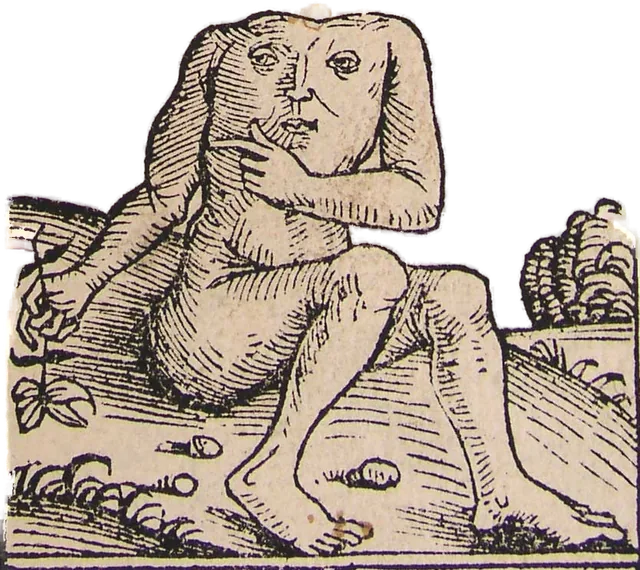
Nuremberg Blemmye
The Travels of Sir John Mandeville & Nuremberg Chronicle (1493)
Hailing from ancient travelers' lore and medieval encyclopedias, the Blemmyes are men whose heads are omitted entirely, their eyes and mouths embedded directly into their chests. An exercise in biological minimalism.
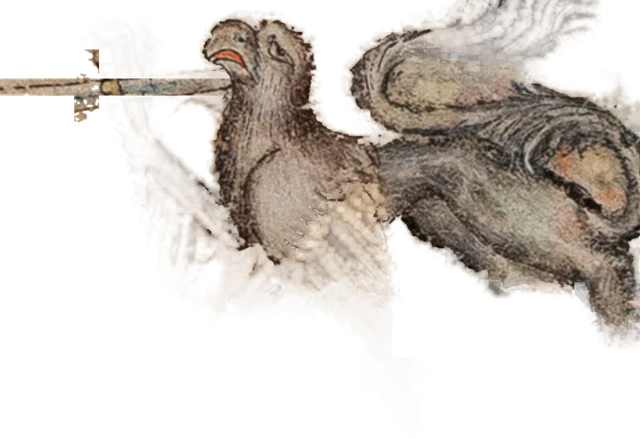
Griffin of the Royal Sceptre
14th-century Psalter marginalia
A formidable hybrid of raptor and apex predator, clutching a judicial sceptre with unearned confidence. In medieval margins, griffins often inverted royal heraldry by brandishing weapons of state while glaring skeptically at the reader.
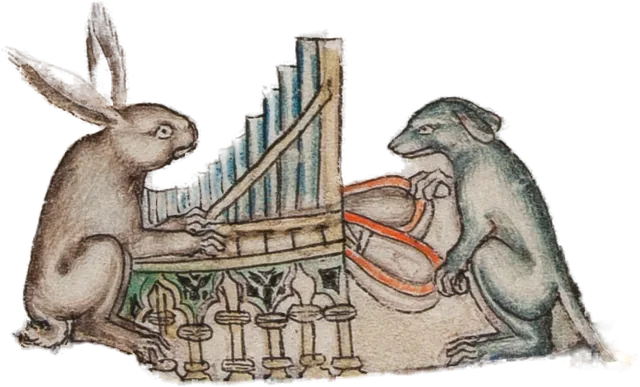
Organ Hare And Hound
Franco-Flemish Book of Hours (c. 1320)
The ultimate inversion of ecclesiastical solemnity. A hare solemnly performs sacred polyphony on a portable positive organ while an enslaved hound pumps the twin leather bellows with palpable exhaustion. A classic medieval satire of monastic choir performance.

Lion (Roger)
Medieval lion lore; modern mascot
Medieval bestiaries describe the lion sleeping with open eyes and restoring its cubs to life after three days. These stories were interpreted through Christian ideas of vigilance and resurrection. Roger is our modern mascot name; his weary personality is a brand invention.
Read Lore →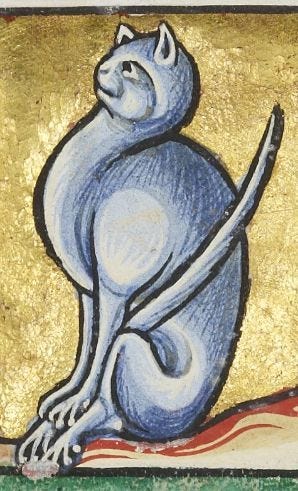
Skeptical Cat
The Ashmole Bestiary (Bodleian MS. Ashmole 1511)
Bestiary writers connect the Latin name musio with the cat’s pursuit of mice. The Ashmole Bestiary illustrates cats on folio 35v, not 36r. “Skeptical Cat” is our affectionate modern nickname, rather than an interpretation supplied by its medieval artist.
Killer Rabbit
The Smithfield Decretals & The Maastricht Hours
Armed rabbits and hares turn the usual relationship between hunter and prey upside down in medieval marginal art. The Smithfield Decretals contain a sequence in which rabbits capture, try and execute a hunter. Such images invite comic and satirical readings, but a specific reference to peasant revolt should not be assumed.
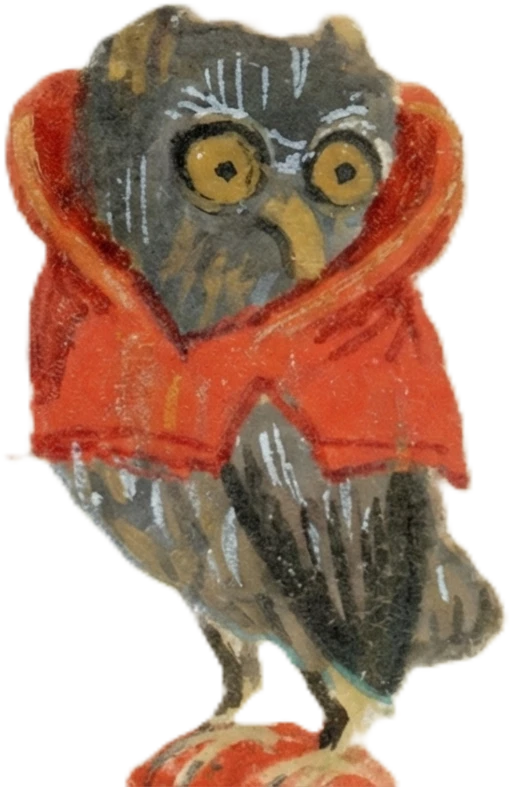
Clarence
Medieval Animals character
Clarence is our name for the owl character used in the shop. His deadpan personality and fashion commentary are modern storytelling. The previous identification with Luttrell Psalter folio 145r has not been substantiated, and the illustrator’s intended meaning is unknown.

Skullhaunch
Medieval Animals character
Skullhaunch is our modern name for this grotesque character. Medieval artists often combined human and animal features in imaginative ways. The previous attribution to Luttrell Psalter folio 162v and a specific memento mori meaning have not been verified.
Read Lore →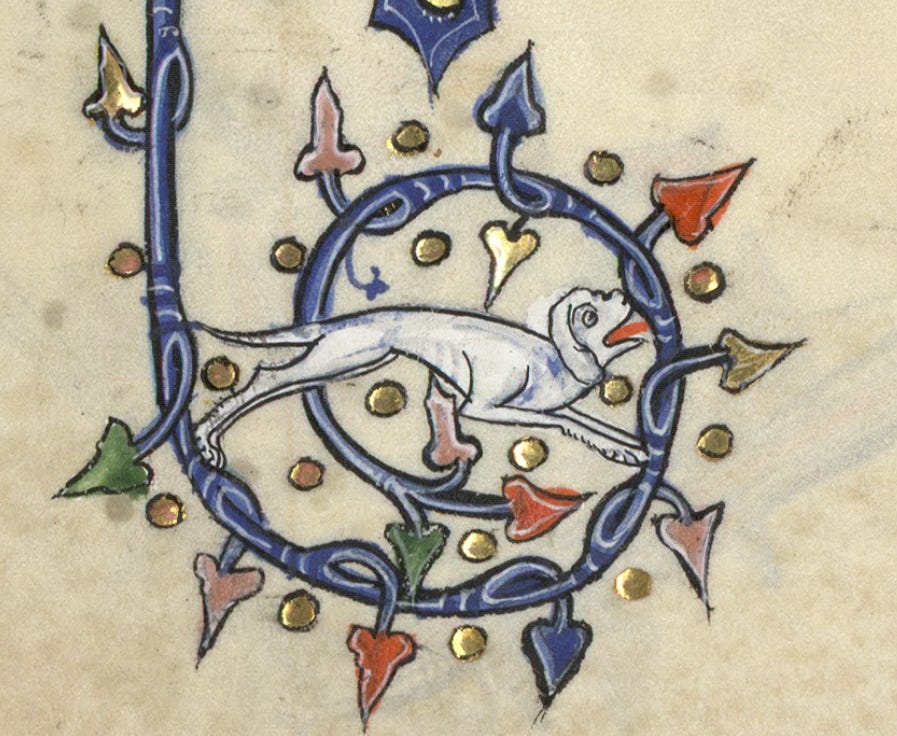
Metz Acanthus Piper
Attributed to Metz MS 1588; image match unverified
This cropped illustration shows a hybrid musician among decorative foliage. Our “Metz Piper” name follows an existing attribution to Metz MS 1588; the precise folio and image match remain unverified. Its personality is our interpretation.
Flemish Border Snail
Flemish manuscript border tradition
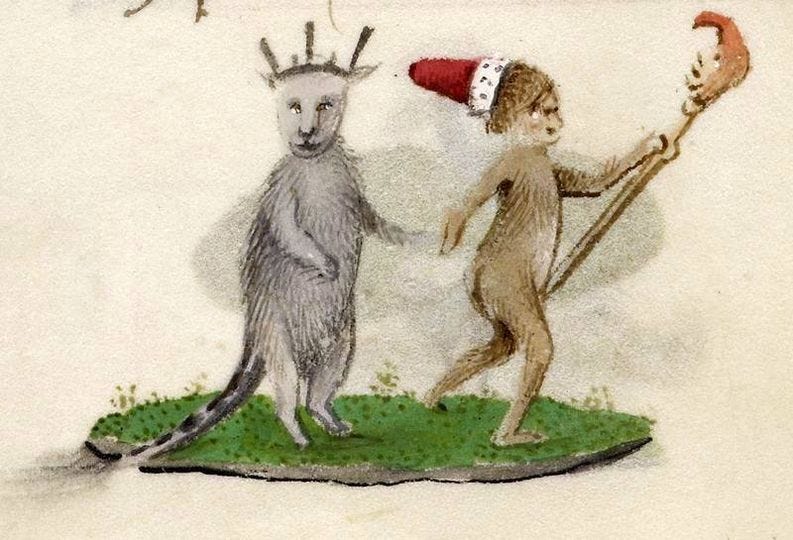
Late Flemish manuscript borders often include carefully observed small creatures. The Hours of Joanna I of Castile contains a snail in the border of folio 36r. Our separate cropped snail image has not been securely matched to a folio, so the previous folio 44r attribution has been removed.
Bonnacon
Pliny the Elder / The Aberdeen Bestiary
In bestiary legend, the bonnacon resembles a bull whose inward-curving horns are useless for defence. It escapes pursuers by ejecting dung that burns them. Accounts vary in the distance described; this is a fabulous animal story, not zoology.
Great Dragon
The Harley Bestiary & Aberdeen Bestiary
In medieval bestiaries, the dragon is a great serpent and an enemy of the elephant. Its power lies in its tail rather than venom. The panther’s sweet breath drives it away. Christian interpreters frequently associate the dragon with the devil; these are literary traditions, not natural-history observations.

Madgoose
Medieval Animals character
Madgoose is our heraldic-style goose character. Its martial personality belongs to the modern design. The previous claim that this specific emblem came from Gorleston Psalter folio 72r has not been verified.
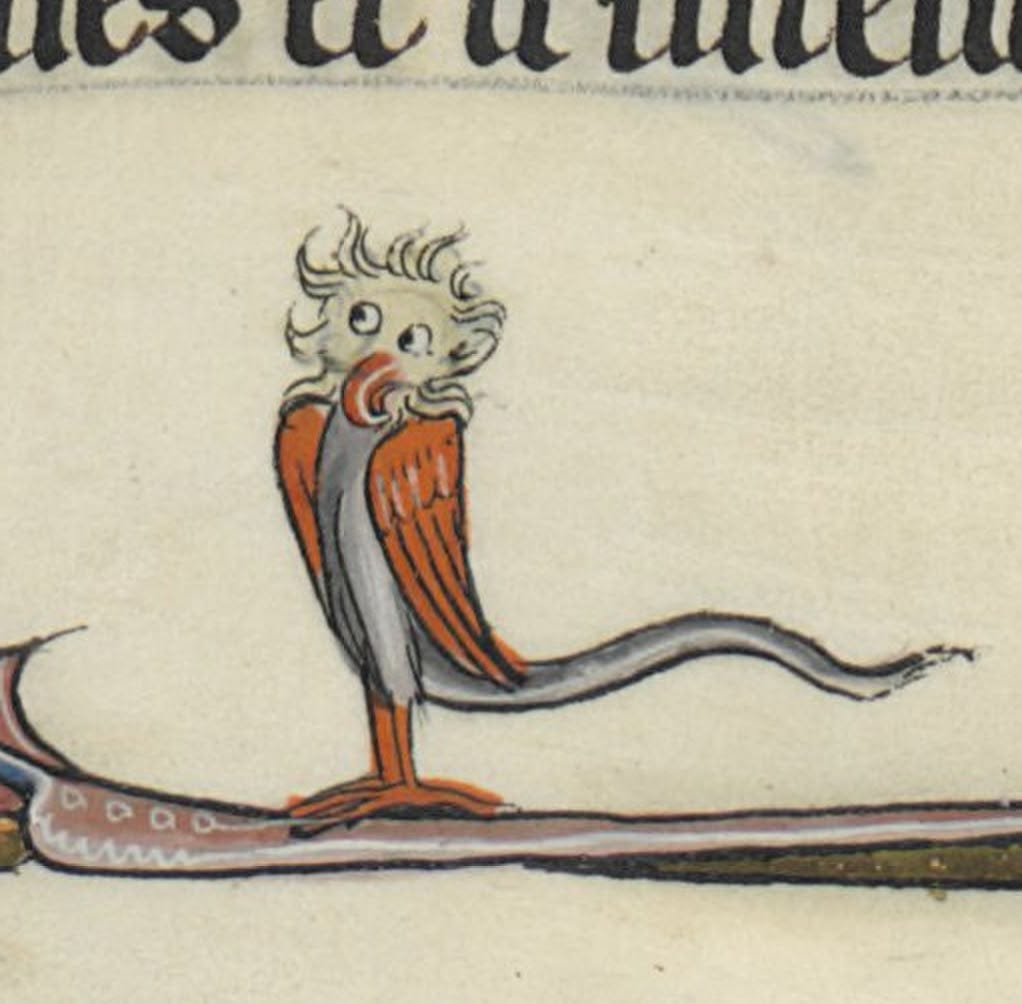
Mignon Avian Hybrid
Roman Arthurien (BnF MS Français 95)
Mignon, French for “cute” or “darling,” is our nickname for this bird-like hybrid. BnF Français 95 contains Arthurian stories and imaginative marginal figures, but the exact source of this crop and its previous folio 142r citation remain unverified.

Japanese Sharks (provisional attribution)
Attributed to Edo-period Japan; not medieval
These stylized sharks circulate with an attribution to Japanese Oki products illustrations dated 1735. A matching institutional record has not yet been found. They are retained as a provisional early-modern comparison, rather than presented as medieval animals or identified deep-sea species.
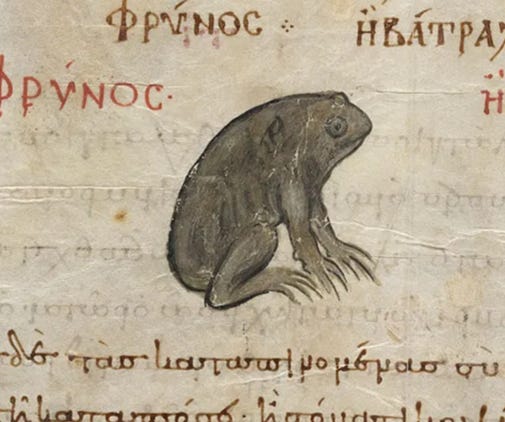
Byzantine Marsh Frog
The Morgan Dioscorides (Constantinople, c. 950)
The Morgan catalogue identifies a frog on folio 318v of its tenth-century Dioscorides manuscript, made in Constantinople. The accompanying Greek inscription names the animal. It belongs to a medical text; identifying a modern frog species or assigning it a fixed symbolic meaning would go beyond the evidence.
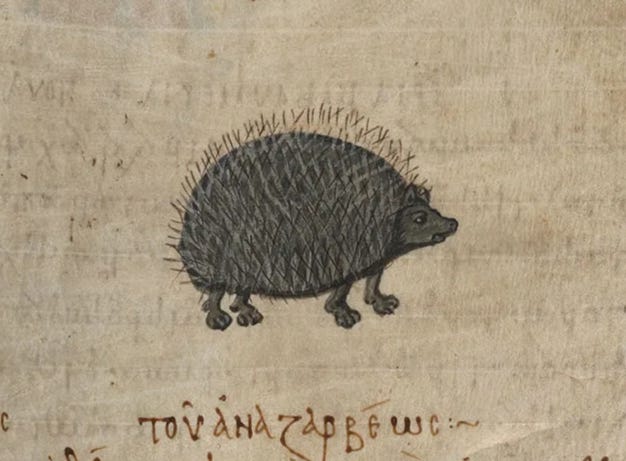
Constantinople Hedgehog
The Morgan Dioscorides (Constantinople, c. 950)
This hedgehog crop has been attributed to the Morgan Dioscorides, but the earlier folio 204r identification remains unverified. Separately, Western bestiary lore describes hedgehogs carrying fruit on their spines. That legend should not be treated as the meaning of this particular medical illustration.
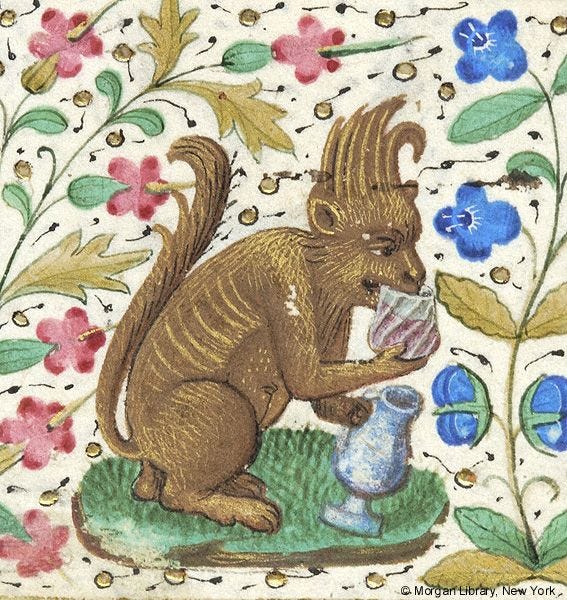
Wine Monkey of Paris
Morgan Book of Hours, Use of Paris (MS M.282, c. 1460)
Our “Wine Monkey” nickname describes the playful drinking creature in this crop, credited to the Morgan Library. The associated M.282 manuscript was made in Paris around 1460 for the Use of Rome. The exact folio, contents of the vessel and intended satire remain unverified.
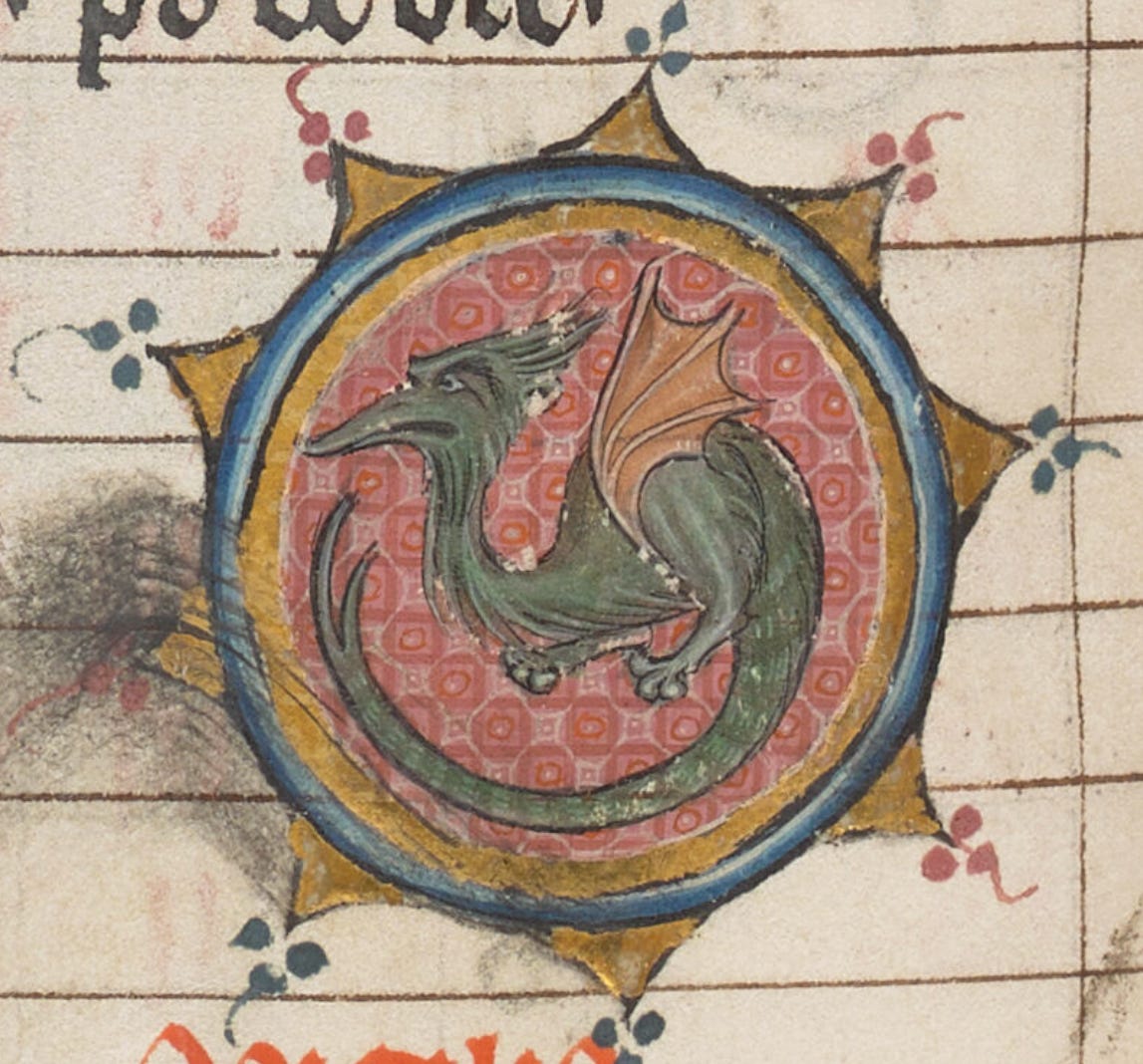
Verdun Coiled Wyvern
The Verdun Breviary (British Library Yates Thompson MS 8)
This crop shows a winged dragon in a decorated roundel. It has been attributed to the Breviary of Renaud de Bar, but the specific folio 5v match remains unverified. “Wyvern” is a convenient modern description, not a secure medieval species identification.
Panther
Medieval bestiary tradition
A many-coloured panther sleeps after feeding, then wakes with a sweet-smelling cry that attracts other animals. Only the dragon flees. Medieval Christian writers read the panther as an image of Christ.
Pelican
Medieval bestiary tradition
Bestiary legend tells of a pelican reviving its dead young with blood from its own breast. Versions differ over which parent acts. Christian readers connected this story with Christ’s sacrifice.
Unicorn
Medieval bestiary tradition
The bestiary unicorn is a fierce, single-horned animal captured with the help of a maiden. Its appearance and story vary between texts. Christian interpreters associated the capture with the Incarnation.
Caladrius
Medieval bestiary tradition
A white bird in medieval legend reveals the fate of a sick person. If it looks at the patient, recovery is possible; it takes away the illness and flies towards the sun. Turning away foretells death. This is a medieval story, not medical advice.